
Water Vole
During early June 2011, at least three water voles were seen in the River Hun at Holme-next-the-Sea, with one carrying a young vole in its mouth.
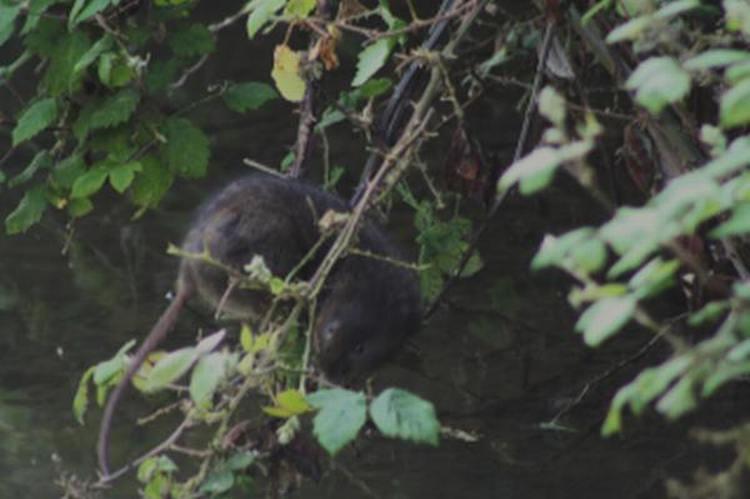
Water Vole, the River Hun north of Redwell Marsh, 2nd June, 2011
Photo Paul Allen
"Ratty" in Kenneth Grahame's Wind in the Willows was, of course, a water vole (Arvicola amphibius) and not a rat. During the early part of June, 2011 at least three water voles were seen in the River Hun just north of Redwell Marsh at Holme-next-the-Sea. One of the animals was seen carrying a young water vole in its mouth.
Water voles have rounder noses than rats, deep brown fur, chubby faces and short fuzzy ears; unlike rats their tails, paws and ears are covered with hair. They mainly eat grass and plants near the water. At times, they will also consume fruits, bulbs, twigs, buds, and roots.
The mating period lasts from March into late autumn. The female vole's pregnancy lasts for approximately 21 days. Up to 8 baby voles can be born, each weighing around 10 grams (0.4 oz). The young voles open their eyes three days after their birth. They are half the size of a full grown water vole by the time they are weaned.
Water voles are expert swimmers and divers. They do not usually live in large groups and in the wild, they survive for 2 years on average; most do not survive a second winter.
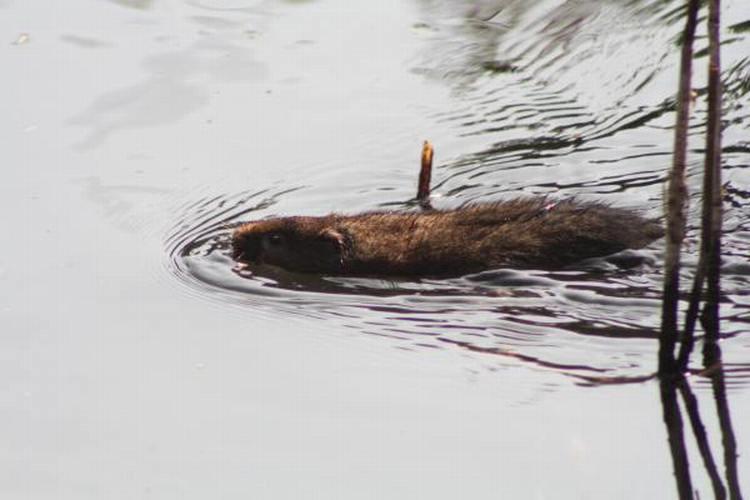
Water Vole, the River Hun north of Redwell Marsh, 2nd June, 2011
Photo Paul Allen